When was the last time you checked your tyre tread depth? If you’re not sure, you’re not alone—but you might be putting yourself and others at risk.
Tyres are the only part of your vehicle that touches the road. That contact has to count. Worn tyres not only increase your stopping distance but can also lead to a loss of control, especially in wet weather. Worse still, driving with illegal tyres can land you with a £2,500 fine and three penalty points per tyre. Yes, really.
So let’s break it down: what does the law say, how can you check your tyres, and why does it matter so much?
What is tyre tread and why is it important?
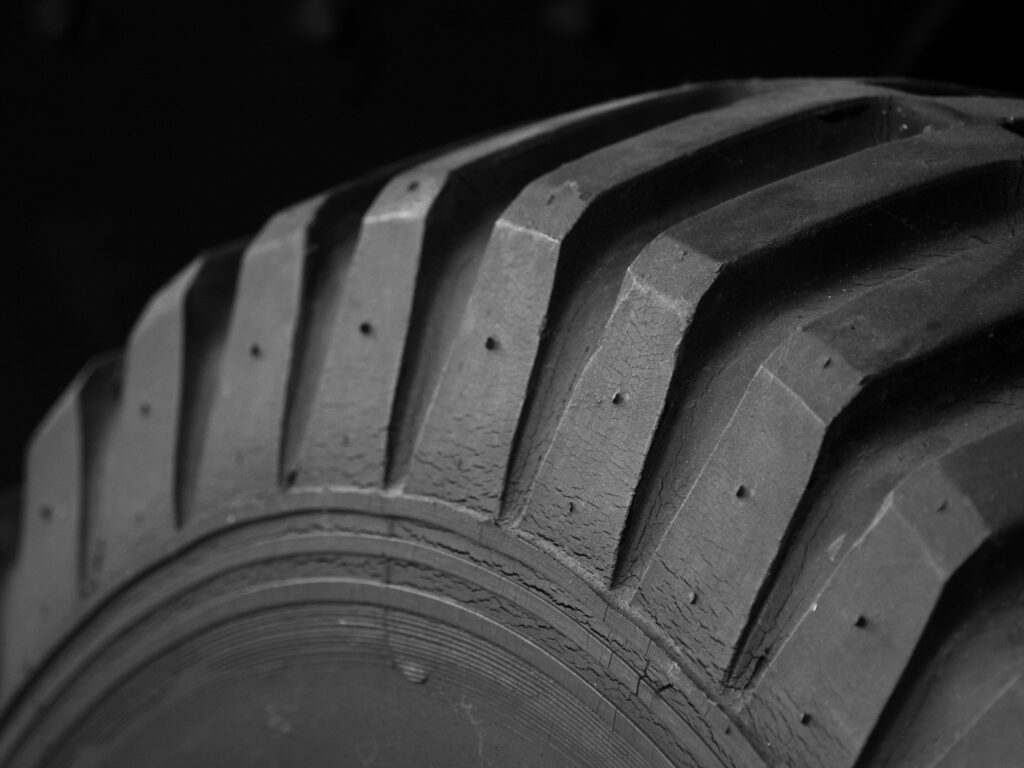
Tyre tread is the grooved pattern on the surface of your tyre. It’s there for one key reason—grip. Those grooves help to channel water away from the tyre so that your car maintains traction, even in heavy rain. Without enough tread, your car is far more likely to aquaplane, skid or take longer to stop.
To put it simply: deeper tread = better grip = safer driving.
What is the legal tread depth in the UK?
In the UK, the legal minimum tyre tread depth is 1.6mm, measured across the central three-quarters of the tyre’s width and around its full circumference.
But here’s the catch: 1.6mm is a minimum, not a recommendation. Most experts suggest replacing tyres when the tread gets to 3mm. Why? Because below that, stopping distances increase fast: up to two car lengths longer at 50 mph. In wet weather, that could make all the difference between a near miss and a serious crash.
How to check your tyre tread depth
You don’t need special tools to check your tyres. You just need a 20p coin. Place it into the tyre’s main groove. If the outer rim of the coin is hidden, you’ve got more than 3mm—great. If you can see any part of the rim, your tread could be close to or below the legal limit.
There are also tread wear indicators built into the tyre itself—small bars at the bottom of the grooves. If the tread is level with these bars, it’s time to change the tyre.
The DVSA has a short video on how to check your tyre. It’s part of the official guide to the “show me, tell me” questions you’ll get at the start of your driving test. You can watch it here—the section about tyres starts at 1 minute and 16 seconds, but watching the whole thing is very much recommended, especially for learners and new drivers.
Why it’s worth checking more than just tread depth
It’s not only tread that matters. Tyres should be free from damage, bulges or deep cuts. Any exposed cords or fabric mean the tyre is illegal. You should also make sure your tyres are inflated to the correct pressure—check your vehicle’s manual for the right number.
You must also make sure the same type of tyre is fitted on both sides of the same axle. For example, you can’t have a radial tyre on one side and a cross-ply on the other. This isn’t just unsafe. It’s against the law.
Become responsible, safe and confident driver
Whether you’re driving in Edinburgh, learning the roads in Bristol, or getting ready for your test in Glasgow, checking your tyres is part of being a responsible driver. Bald tyres are actually one of the most common reasons cars fail their MOT.
At Pass in Days, we know what it takes to get test-ready—and to build the habits that make you a skilled, safe driver. Our intensive driving lessons in Aberdeen (covering AB10, AB11, AB25, AB24 and more), Exeter, Glasgow and surrounding areas (G1, G3, G4, PA1 and more), Edinburgh (eg. EH1, EH3, EH8), and Bristol are built to give learners the skills and awareness they need. Not just to pass, but to stay safe on the road long after the test.
We’ve been doing this for over 10 years, and tyre safety is something we always focus on during our courses.
Are you are looking for a driving course and a fast-track driving test? Do not hesitate to get in touch! Call us on 07413 250 300, visit our Facebook page, or fill in the contact form today!